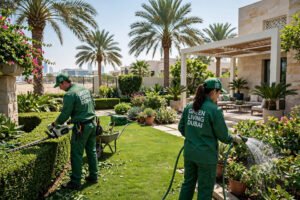
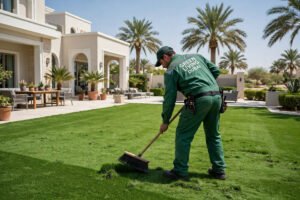
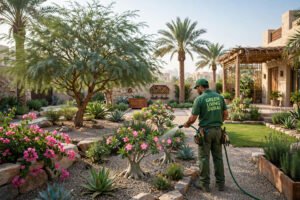
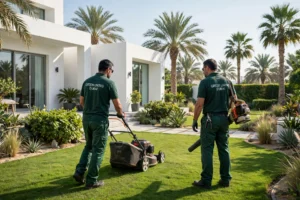
A villa garden in Dubai can stay green without wasting water – but only if it is designed for this climate from the start. A lawn that needs daily watering, thirsty plants that struggle through summer, and an irrigation system that runs on a fixed timer will cost more every month and still look tired by August. Sustainable landscaping is simply the opposite: the right plants, the right watering, and a design that works with Dubai’s heat instead of fighting it.
This guide covers sustainable landscaping in Dubai: which plants actually thrive here, how drip irrigation and smart watering cut waste, what a low-maintenance sustainable garden costs, and how to tell whether a landscaper’s “eco” promise is real.
1. What sustainable landscaping means in Dubai
Sustainable landscaping in Dubai is not about giving up a green garden. It means a garden that stays green on less water, with less work, for more years. Three things decide it: plants chosen for heat and salty soil, watering that reaches the roots instead of the air, and soil and mulch that hold moisture instead of letting it evaporate by midday.
A garden built this way costs less to maintain month after month – fewer dead plants to replace, lower water bills, and fewer emergency call-outs in summer. A garden built the other way – imported lawn, thirsty flowers, sprinklers running at noon – looks good for a season and then becomes a repair bill.
2. Native and desert-adapted plants that actually thrive
The cheapest plant is the one that never needs replacing. In Dubai that means native and desert-adapted species: ghaf trees, date palms, bougainvillea, frangipani, desert rose, oleander, and hardy ground covers that handle heat, wind and salty water. They need far less watering once established than imported lawns and temperate flowers – and they still flower and shade a villa properly.
Two things owners should always check: does the planting plan name the species and where each one goes, and does it say how much water each needs once established? A plan that only says “mixed shrubs and seasonal flowers” is not a sustainable design – it is a guess. Seasonal flowers have their place as colour, but they should be the accent, not the backbone of the garden.
3. Drip irrigation: the single biggest water saver
Drip irrigation delivers water slowly, straight to the roots, instead of spraying it into hot air where half of it evaporates. For beds, hedges and trees it is the single biggest water saver in a Dubai garden – and it is also the system that needs the least fixing once it is installed properly.
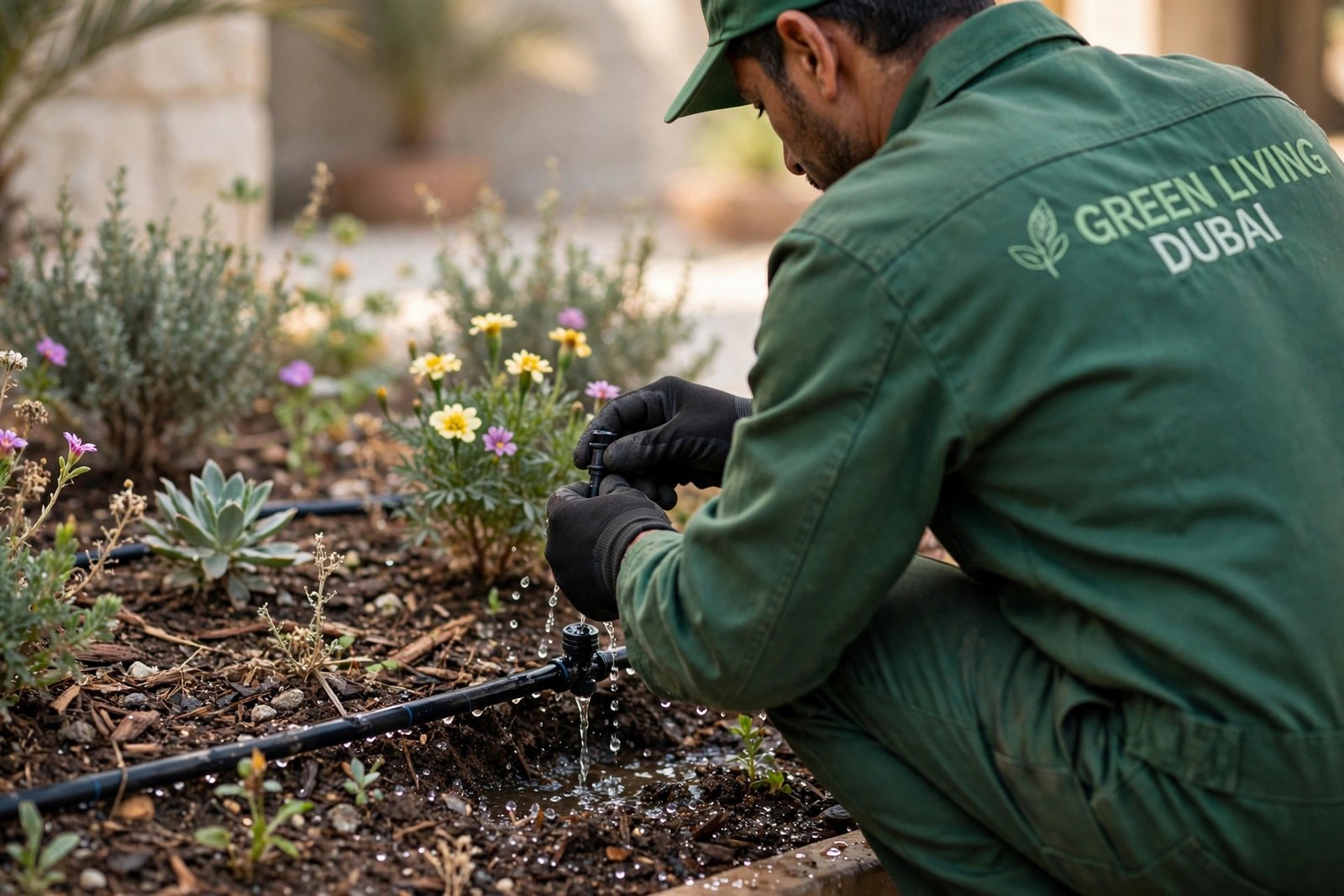
A good drip system is zoned: lawns, beds and trees each get their own timing, because they drink at different rates. It runs in the cool hours – early morning or evening – never at midday. And it is checked on every maintenance visit, because one clogged emitter can kill a bed of plants before anyone notices. A sprinkler-only garden in Dubai is not sustainable, however green it looks on handover day.
4. Lawns, mulch and soil: where the water really goes
A full imported lawn is the thirstiest part of most villa gardens. Sustainable design does not always mean removing it – it means sizing it honestly: lawn where the family actually uses it, and gravel, decking, native ground cover or planting beds where nobody walks. Every square metre of lawn removed is water and mowing saved every week.
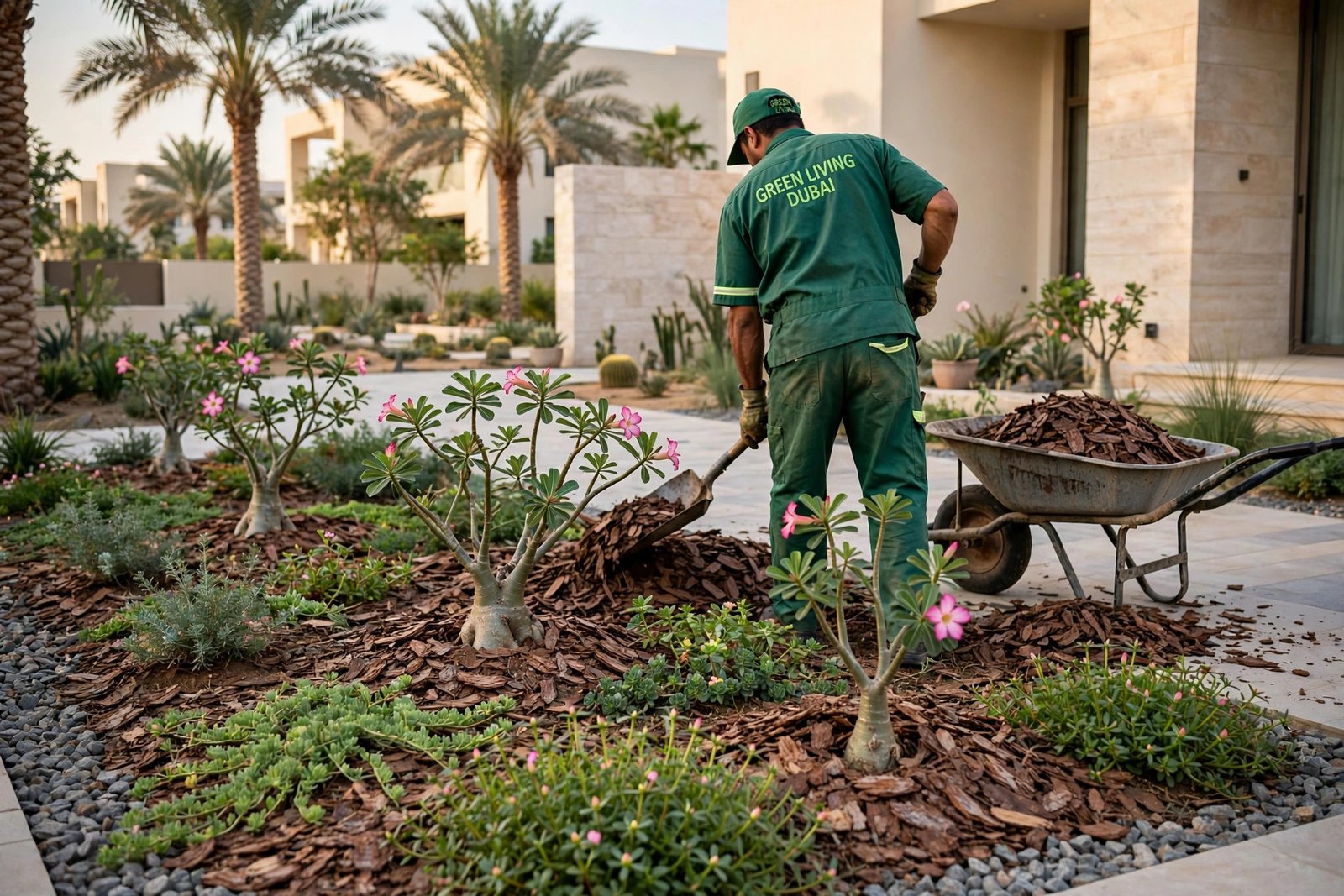
Mulch is the quiet hero: a layer of bark or gravel over beds keeps the soil cool, holds moisture after watering, and stops weeds. Good soil matters just as much – sandy Dubai soil drains fast, so compost and organic matter mixed in before planting help the ground hold water long enough for roots to drink it.
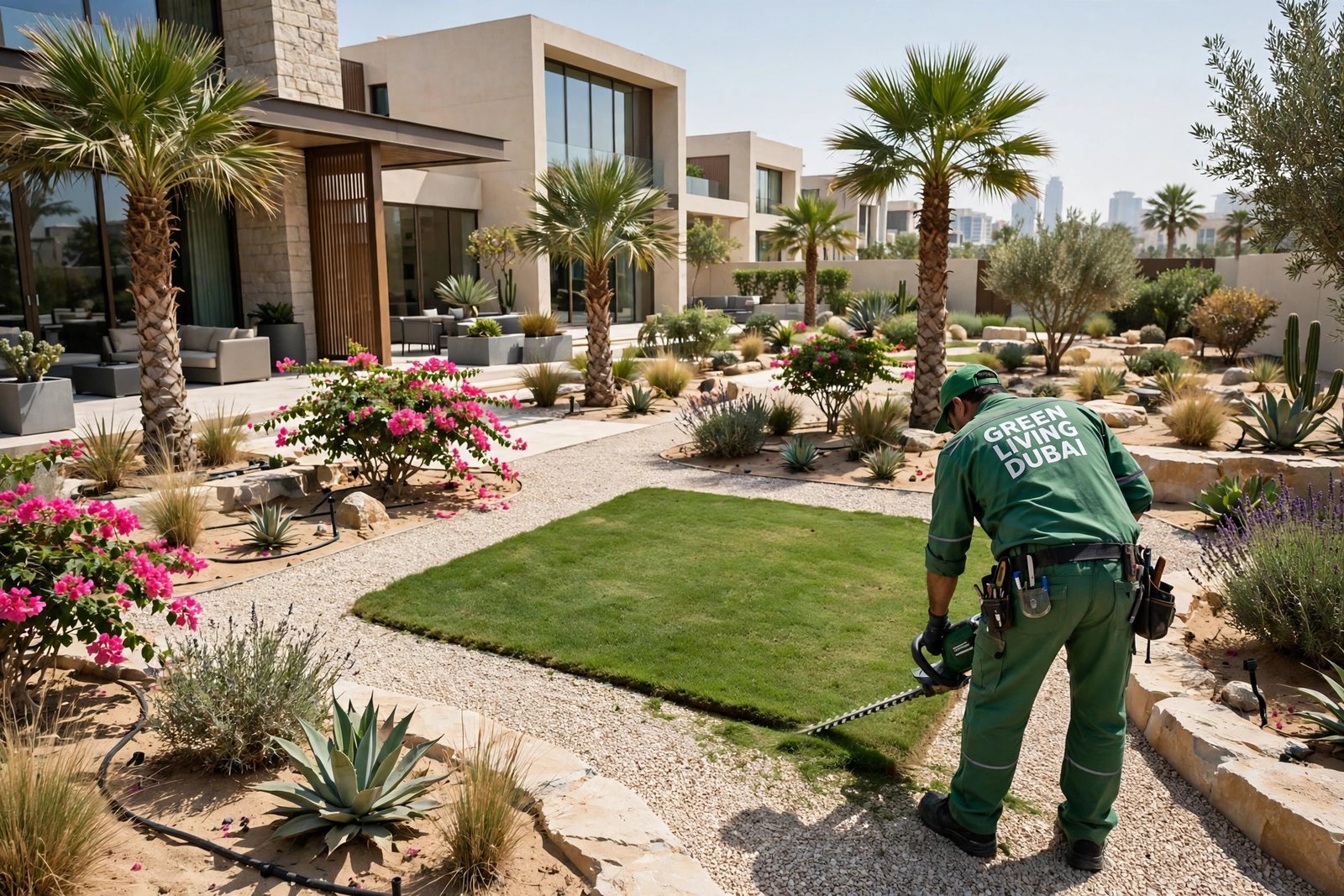
5. What does sustainable landscaping cost in Dubai?
There is no single price, because no two gardens are the same size – but the pattern is consistent: a sustainable garden can cost a little more to build and noticeably less to keep. Native plants and a zoned drip system cost more up front than turf and sprinklers, and then save money every month on water, replacements and call-outs.
For scale, monthly garden maintenance contracts typically range from AED 400 to AED 1,500 per month depending on garden size and visit frequency, and a monthly pool contract with weekly visits typically costs AED 400-800 per month on its own. A garden renovation – which is often how a thirsty old garden becomes a sustainable one – is priced per project after a free site visit. The exact figure for any garden comes from a free site visit and one fixed quotation, because the honest answer depends on the garden’s size, soil and existing planting.
Two things move the cost: how much lawn stays, and how much of the old irrigation can be kept. A garden that keeps its sprinklers and its full lawn will keep its water bill too. A garden that switches beds and trees to drip and shrinks the lawn to the area the family uses will see the saving in the first summer.
6. How to tell if a landscaper’s “eco” promise is real
Three questions separate a real sustainable design from a sales line. First, does the quotation name the plant species and the irrigation zones, or does it only say “eco-friendly”? Second, does the maintenance plan include an irrigation check on every visit? Third, is there a watering schedule for summer and winter, or one fixed timer all year?
If the answers are specific – species named, zones named, checks on every visit, two seasonal schedules – the design is real. If the answers are vague, the garden will be an ordinary garden with a green label on it.
Is sustainable landscaping more expensive?
It can cost a little more to build – native plants and a zoned drip system are not the cheapest option on day one – but it costs less every month after that, on water, replacements and call-outs.
Do native plants look as good as imported ones?
Yes – ghaf, date palm, bougainvillea, frangipani and desert rose all flower and shade well in Dubai, and they stay alive through summer without constant care.
Can an existing garden be made sustainable?
Usually, yes. The commonest fix is switching beds and trees to drip irrigation, shrinking the lawn to the area the family uses, adding mulch, and replacing the thirstiest plants as they fail.
Does drip irrigation work for lawns too?
Drip is best for beds, hedges and trees. Lawns still need sprinklers or subsurface drip, zoned separately and run in the cool hours.
How much water does drip irrigation actually save?
It depends on the garden, but drip loses far less to evaporation than midday sprinklers because the water goes straight to the roots in the cool hours. The saving shows in the first summer’s water bill.